

This year’s Fashion Transparency Index reviewed 250 of the world’s largest fashion brands and retailers; ranking them dependent on their disclosure of ‘social and environmental policies, practices and impacts’. Intending to ‘incentivise and push more brands into being more transparent’, it is no surprise that the report doesn’t not highlight the best brands in the industry but instead the biggest.
Transparency is, we can gauge, crucial in developing accountability in previously clouded business models. A starting point in ensuring that brands take greater responsibility for their policies. The report shed a light on the transparency, or lack of, within some of the biggest brands and retailers. It allows for an accountability, scrutiny and hopeful prevention of disasters such as the Rana Plaza disaster in 2013; as larger brands disclose supply chain information. It is not, however, ensuring systematic change of a system that has caused damage to so many lives.
Breaking down the Transparency Index
Defining transparency is a starting point for understanding the report. The definition given in the Index is: the public disclosure of comprehensive and comparable data and information about fashion’s supply chains, business practices and the impacts of these practices on workers, communities and the environment.
Most of the brands reported do not put sustainability or ethics first; yet through incentives and public demand for information in order to augment trust, brands are beginning to comply. It does not mean they are taking action to improve their ethics or sustainability, whether they are ‘good’ or bad’, but that we, as consumers, have greater access to information regarding social and environmental topics that can lead to greater accountability.

As consumers battle against conflicting ideas of what is sustainable, transparency is not the crux. It may aid in securing knowledge that some e-retailers that Pretty Little Thing are not in the slightest transparent about social and environmental aspects of their conpany and that the luxury brand Ermengildo Zegna has become the first luxury brand to supply a detailed supplier list but equally does not make it an ethical or sustainable brand.
The Index’s first few pages do well to examine the problems revealed with the participating brands, including the spotlight that Coronavirus has cast on overconsumption and how the climate crisis is becoming a bigger issue for brands. Also explained within the Index is the importance of transparency, the disclosure of information from big brands exists because they may work with hundreds or thousands of factories simultaneously; at every step of the supply chain there are workers, environmental factors, materials that need to be accounted for. The increase in transparency from large is positive as a starting point and tool for change.

Participation in the Index influences brands to disclose more information. Those who participated within the reporting index received an average percentage of 35%, compared to non-participating brands who scored an average of 11% (0% meaning that they would disclose nothing, upwards of 80% meaning that they publish detailed information about their supply chain). There has been an increase in disclosing supplier lists, as 40% of the 250 brands published their manufacturers. Yet, as has been a problem for previous years, there is a continued lack of transparency on living wages for workers. It is this issue that reinforces the fact that transparency does not = ethics or adhering to labour rights.
The retailers and brands are selected from their annual turnover, over USD 400 million, representing a spread of sectors and countries within the fashion industry (already committing to some level of damage due to the sales needed to amass such a turnover). Those who do not disclose financial information yet may surpass the turnover are omitted; hence an awareness that not all large brands are accounted for and this cannot be a fully extensive report for every company, although the ones investigated are done with an extensive methodology. Spotlighting on issues such as conditions, consumption, composition and climate – the Index discusses these key problems with regards to the 250 brands. Within the 70 pages it is clear that the Index is a starting point for information, not the end-point. It’s an indication that brands are moving in the right direction, giving the consumer greater information about their practices but it is these practices that highlight the devastating impact. As seen through the current COVID-19 pandemic, many of the brands mentioned have been forced to #PayUp, an indication that ethics have not improved in the seven years since the Rana Plaza disaster, as many of these brands suggest through their rhetoric.
From a consumer perspective, transparency does matter to the extent that we can make more informed choices; knowing to some degree the origins of our clothing. Information should, however, be readily available, as truly ethical and sustainable brands do not need to be incentivised to make note of who made their clothes, it is simply the norm.
There are still questions…
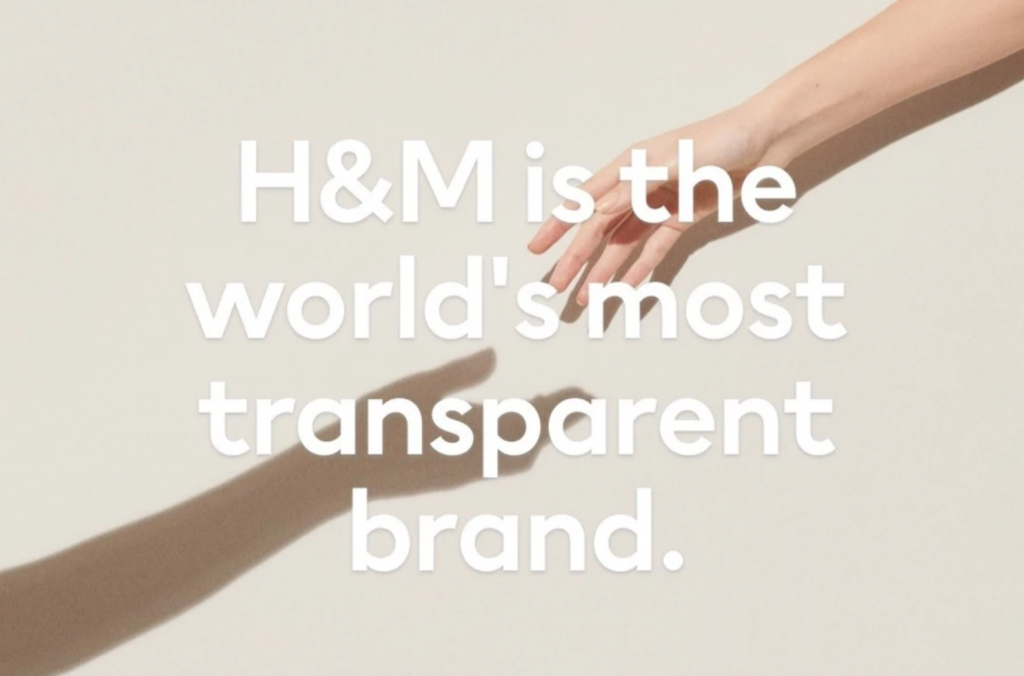
It’s easy to brush off a conversation about the high street getting more sustainable as a result of brands like H&M in a discourse that is possibly be perpetuated by the Index; the brand is not sustainable in their manufacturing, nor are they ethical.

Instead of using Fashion Revolution week as a force for change, H&M have used it as a marketing tool that one can quite simply say has backfired, leading to the deletion of their Instagram post (accessible thanks to Aja Barber’s Instagram post discussing the topic). Despite brandishing themselves as ‘the most transparent brand in the world’, H&M may be transparent in its supply chain but it is far from the most transparent in the world; the Index looked into 250 of the largest brands.
If the report was to build brands’ trust with the consumer, H&M have succeeded in doing quite the opposite. Aja’s Instagram post highlights that H&M hashtagged #sustainability, on a report that clearly expresses it is not assessing this, and that the business model of the brand is far from sustainable. Transparency not equalling sustainability can be further highlighted when considering that Patagonia scored lower than H&M and the second highest ranking brand, C&A have been one of many brands forced to #PayUp during the pandemic.
If brands do not disclose any information about facets of their supply chain, that is cause for concern. If brands, like H&M, disclose information about their supply chain, we still need to question the practices of the brand and the sheer fact that H&M continue to exploit their workers and churn out collection after collection. Know The Origin made clear that you can be fully transparent about something but it doesn’t make the action okay; this is explored further in their article highlighting that transparency doesn’t equal ethical.
Top tips when researching a brand’s sustainability and ethics
Transparency is key when investigating large brands and having a greater awareness before buying but what about ethics and sustainability? Here are a few tips for when you find a fashion brand you <3 but may be unsure of its sustainability and ethics:
- Their website displays information regarding factories, material and who made the garment. Shopping platforms such as Know The Origin are exemplary of such.
- Look for brands that have certifications through the supply chain. Websites such as Fairtrade have links to brands that have been certified.
- Apps like Good On You are a good indicator of how sustainable a brand is as well as not-for-profit websites like Rank a Brand and the Environmental Working Group as they use a credible criteria to determine sustainability.
- Remember that ethical doesn’t always = sustainable. I’ve got a few pieces from Tach Clothing that are made ethically but with materials that aren’t sustainable so it is always worth looking at the materials, whether that be on their website (which should have full disclosure) or the label. Are the fabrics recyclable or renewable and what are they using to dye the material? The dyeing process often requires harmful chemicals that have adverse environmental effects.
Consumers want to know #whomademyclothes but they also want to know that the person making their clothes has fundamental human rights, a living wage and brands are taking action on environmental policies. Transparency should enable accountability, an accountability that we are still striving for.
Lots of love, eleanor xx

Leave a Reply