
The way we are thinking about clothing is, subconsciously, changing. With no access to physical stores, the realm of online shopping has become the singular outlet for fast fashion brands. However, in light of the pandemic and the impact on workers, fundamental problems continue to permeate the global fashion industry, whether that be in Bangladesh or the UK. Now, more than ever, the need for change within the industry is accentuated as a human rights issue and the lives of workers are put in danger at the expense of new garments. Environmental and ethical consumerism aside; both factory and garment workers are the most at risk and it is now more essential than ever to address.
COVID-19 and its impact on the fashion industry
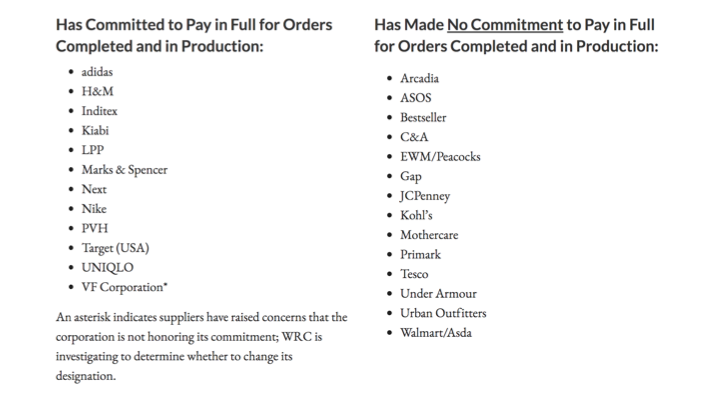
During the Coronavirus pandemic, global companies including Primark and Matalan are cancelling orders, leaving more than one million factory workers in Bangladesh without pay, and workers who continue to manufacture PPE in unsafe conditions. As large brands fight to minimise loss, they do not fight for the livelihood of their most vulnerable workers. Amnesty International has received reports from garment workers in Egypt disclosing that factories are expecting their employees to provide PPE at their own expense and at least 15 factories have closed in Myanmar, leaving thousands without pay or support.
It is clear to see that there are still a wealth of companies that have not made any commitment to pay in full for orders completed or in production. Even then, many companies who are paying in full are delaying payment. Garment workers who are risking their health by continuing to go to work, are then risking it further after being forced to demand their wages.
Sustainable fashion pioneers Lucy Siegle and Livia Firth’s new podcast examines the impact of COVID-19 on the global fashion industry. In discussion with Kalpona Atker, former child labourer and executive director of the Bangladesh Centre for Worker Solidarity, the extent to which global companies exercise a lack of responsibility for their workers as they place orders with garment manufacturing suppliers with no connection to those in the factories was reinforced. Tansy Hoskins, author of Foot Work, also features on the episode; making note of the unsafe treatment of Asos workers in warehouses in the UK which has been further investigated by GMB Union, many other brands also forcing workers to continue working despite the social distancing measures. This, alongside Philip Green’s decision to furlough Arcadia’s workers, brings a global crisis closer to home. The Podcast Wardrobe Crisis with Clare Press further compounds how COVID-19 has impacted the fashion industry, illustrating the impact on garment workers. There is a need for commitment to the welfare of workers and an obligation to #PayUp from companies that have the capacity to pay for their worker’s wages. The labour rights issues ensue.
What can we do to support garment workers in this crisis?
- Boycott fast fashion, during and post COVID-19 (even little steps like unfollowing brands on social media are better than none).
- Fall in love with the clothes you already own or make something new from old
- Support campaigns that are demanding pay for workers during this time, such as #PayUp begun by Remake as well as Labour Behind the Label, who are calling on big brands to protect the people who make their clothes through their petition. Even a simple share online increases the exposure.
- Keep up to date with accounts like @fash_rev or @cleanclothescampaign who are continuing to highlight companies that are not reaching adequate. Clean Clothes Campaign, in particular, are supplying garment workers with a voice to discuss their treatment. They also have COVID-19 live blog so that you can keep up to date with companies that continue to flout labour rights.
- If it is possible, donate directly to an emergency fund to support garment workers such as the Bangladesh Centre for Worker Solidarity.
Fast-fashion conversations in a post-COVID world
Fast Fashion brands are changing their rhetoric to suit an audience sat at home, with a retained desire to continue buying, as brands such as Boohoo and Pretty Little Thing have demonstrated. Yet is undeniable that we are gaining greater consciousness over the clothes we already own. In an industry that functions on changing trends and a society that changes with them. Aja Barber’s brilliant post brings this to our attention: we are currently breaking up with fast-fashion, albeit subconsciously. To a certain extent, as consumers, we have the power to continue making more conscious choices with regards to what we buy post-lockdown to develop a society where fashion does not harm those in the process. Yet, it is not simply the responsibility of the consumer, as government backing and systematic change is needed in order to ensure that those who are most vulnerable receive the backing needed.
Conversations surrounding fast fashion in a post COVID world should be transformative; although that is perhaps a little naive to make such a bold statement. Fast Fashion will continue to operate, the extent to which and how will be determined by the longevity of the crisis, product loss as well as a large depreciation in revenue. The Bangladesh clothing industry employs 4.1 million workers and as Sophie Benson’s interview with Mostafiz Uddin, founder of a Bangladesh garment factory, makes clear: ‘millions of apparel workers are facing an extremely uncertain future‘. Unfortunately, those who are at the greatest loss will be the garment workers and in the wake of the crisis, there is always a fear that consumption could be greater, not to mention the environmental impact of garments not sold. It is largely important that companies are being held responsible for their workers, who have risked both their health and their livelihood to perpetuate this industry.
The pandemic is, and in the aftermath, it will be even clearer, a decisive moment in shifting practices within the global industry. It is a watershed moment with regards to labour rights movements, exposing pre-existing tears in the fashion industry as gaping holes. Perhaps fast-fashion conversations in a post-COVID-19 world could be considered hypothetical, although it would be hard to deny that change is not at the forefront.
Lots of love, eleanor xx
Ideas for further research:
What is the future of fast fashion? It’s complicated. Coronavirus’ effect on fast fashion – this article did not add to any optimism about changes within the fashion industry, although was incredibly informative.
Podcast: Fashion Critical with Lucy Siegle and Livia Firth
How Could Coronavirus Radically Reshape the British Fashion Industry – incredibly informative about the impact of the Coronavirus on the fashion industry within the UK and how this will affect SMEs and freelancers. There is a great push for greater governmental action both during and after the crisis.
Sophie Benson’s interview with the founder of a Bangladesh Garment Factory during COVID-19: exploring the knock-on effects for garment and factory workers during the pandemic
Webinar with Naomi Klein and Angela Davis on movement during the pandemic – exploring capitalism as a reason for our inability to address the pandemic and the sustained demands for change
Wardrobe Crisis with Clare Press: Ethical Fashion? How COVID-19 is impacting our garment workers
Wardrobe Crisis with Clare Press: Ethical Fashion and Living Wages
Teen Vogue: The Coronavirus is Exposing Holes in Our Current Fast Fashion Model – a long but FANTASTIC article and thoroughly informative article (!!!)


Leave a Reply