

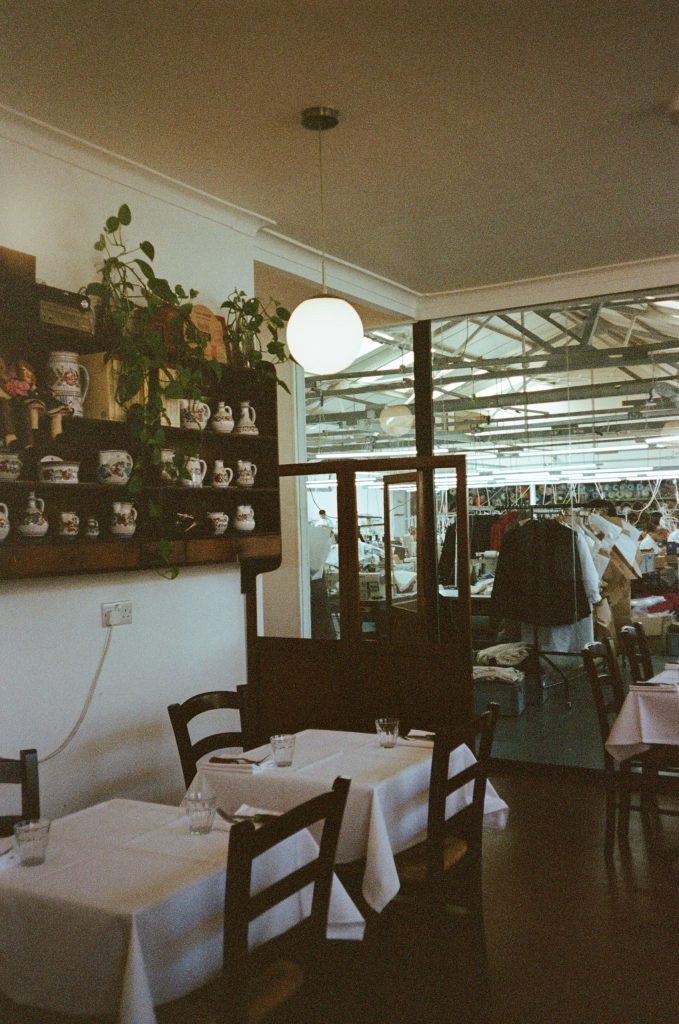
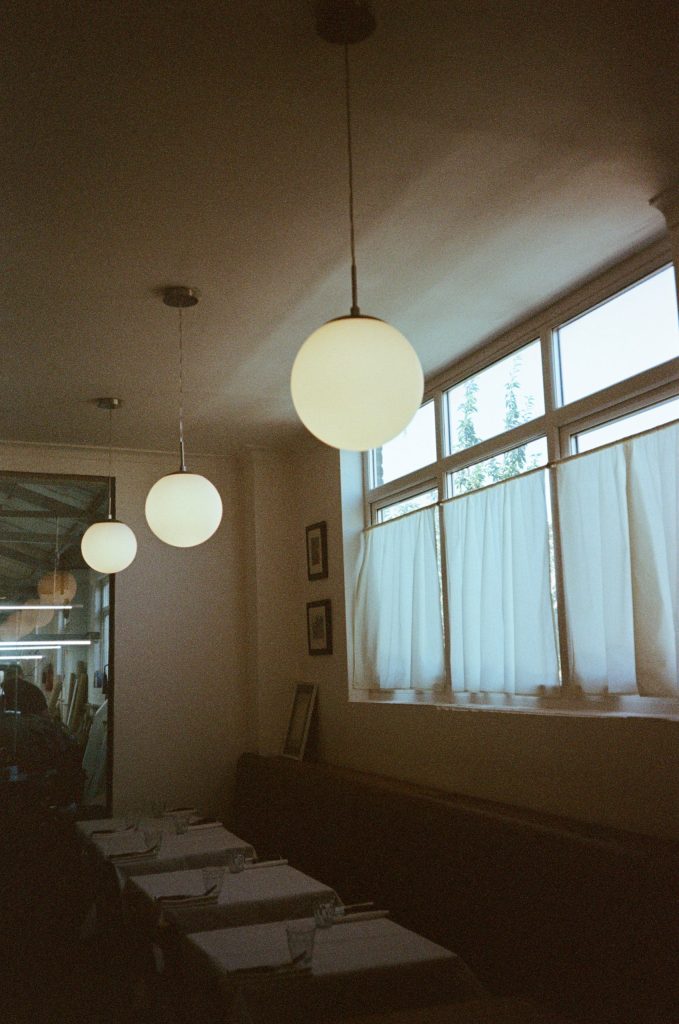
You do not stumble across Polentina. You go looking for it, down the dusty tracks of a Bow industrial estate, until you reach a buzzer with no obvious promise of lunch behind it. Press it, and the door opens onto a room where two kinds of making happen at once: on one side, the long tables and the counter; on the other, through a floor-to-ceiling wall of glass, the sewing machines of a garment factory, humming away all through service.
The glass is no accident. When Sophia Massarella‘s husband moved his sustainable manufacturing company, Apparel Tasker, into the building, she was running Polentina as a lockdown takeaway, and the two ideas folded into one: a canteen for the machinists, a kitchen for the neighbourhood, and a window installed so that diners could watch exactly how their clothes get made. First and foremost, she’ll tell you, it is still a canteen, more than half the room is held for the factory staff at lunch. It is hard to think of another room in London where the question of how things are made is so literally on the table.
Massarella came to cooking from photography, and it shows: both practices imbue a quiet, yet constant care and precision. Polentina’s menu is drawn from the recipes that survive mostly in family kitchens: the stuffed, the layered, the long-simmered, the offal that thrift once demanded and fashion later discarded, food that carries Massarella’s Italian and Austrian heritage and tells, as she puts it, a lot about a cuisine. In a food culture obsessed with the new, Polentina’s radicalism is to treat ‘new’ as a matter of perspective: a dish can be centuries old and still be a discovery, if no one has cooked it for you before. To eat here is to be handed someone’s memory.
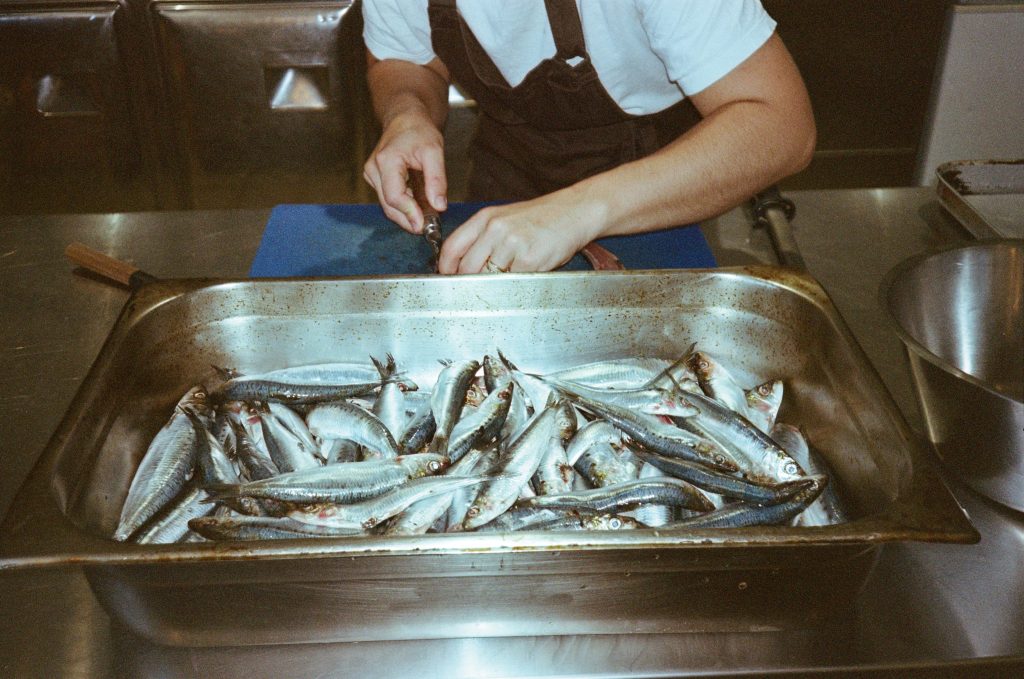
I visited Polentina during one of their prep days, enveloped in the behind-the-scenes mechanics of chopping, kneading and filleting fish. Sophia made one of the best coffees I’ve had in London, then went back to the counter and started on a dough for Marillenknödel, Austrian apricot dumplings. She worked as we talked, about heritage, hospitality and Polentina’s most loved dishes. Through the glass, the machinery hummed away.
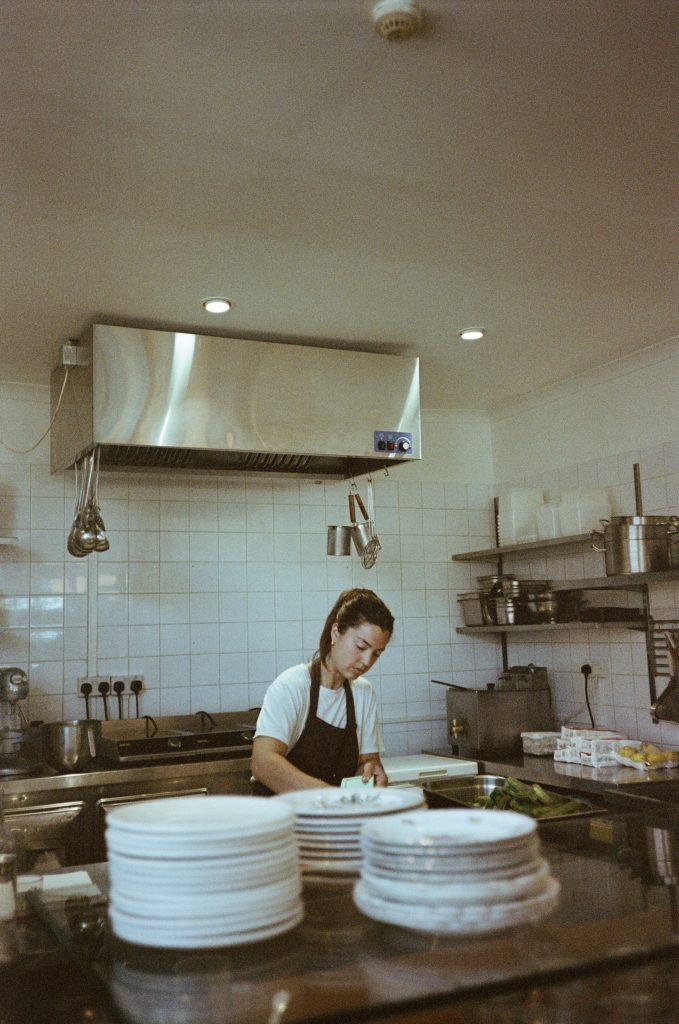

The making of clothes and the making of food are held in one continuous view at Polentina. What drew you to the space, and is there something important about eating while watching sustainable manufacturing and the associated transparency?
It began out of necessity really, my husband had moved his manufacturing company into this building around the time I started Polentina as a takeaway business during Covid, and we thought it would be really special to have a place for his staff to either enjoy their lunches or our food in a nice space. As well as catering to the surrounding neighbourhood.
We installed the glass for exactly that reason, a sort of extension of the transparency of Apparel Tasker. People seem to really enjoy it.
Polentina began as the staff canteen, and the machinists still eat alongside visiting diners. How has that relationship evolved?
The factory staff are like family to me, some have been here almost as long as my husband has had the company. We leave more than half of the room available to them during their lunch, so they still feel like it’s their space. We’ve always had this agreement, as first and foremost we are a canteen.
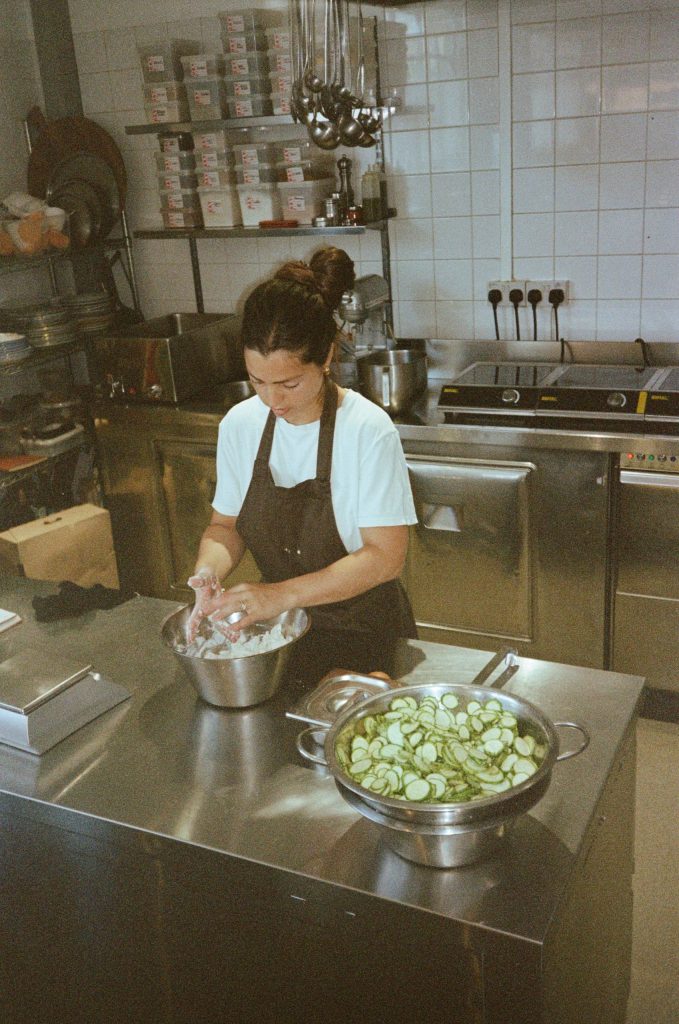
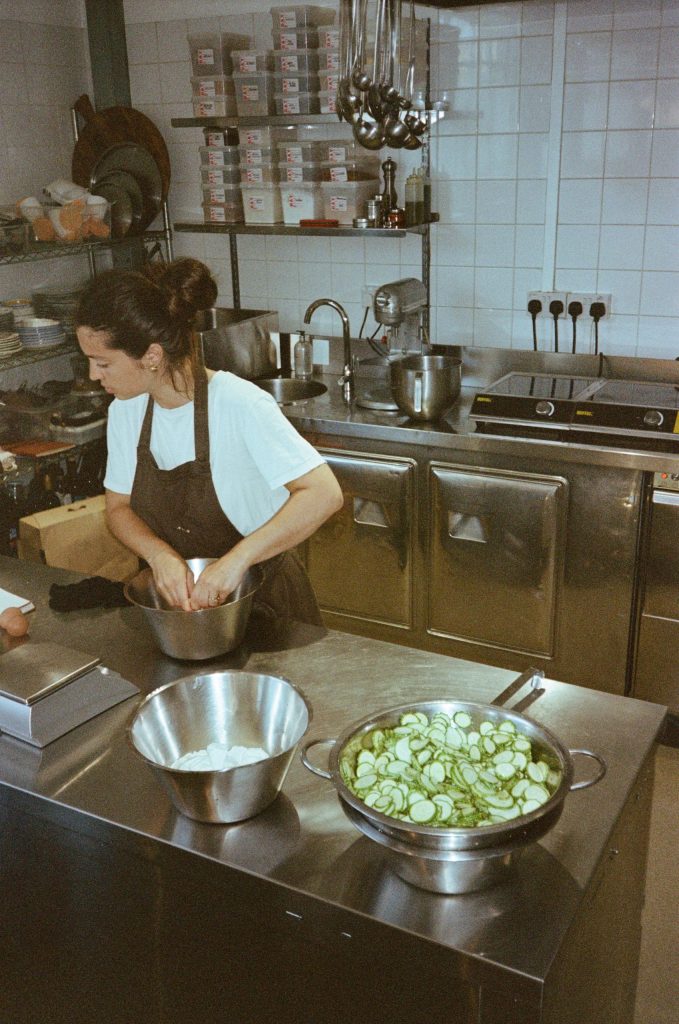
Polentina’s cooking embraces the offal and off-cuts that have ebbed in and out of fashion. What draws you to this tradition, and what does it share with the ethos of the sustainable garment factory around you?
I’ve always been intrigued by the dishes that shaped a place, the older recipes that are maybe forgotten or not often cooked at restaurants, but are a staple at your family’s table.
Offal sits in this area perfectly as it was the cheaper option for a lot of families, and with some creativity they’ve become pieces of history and tell a lot about a cuisine.
Fashion and food both run on seasons; but fashion’s seasons are becoming much more condensed, propagating micro-seasons, while Polentina focuses on seasonal dishes. Does being inside the fashion industry sharpen that understanding?
I think being in hospitality and directly working with produce is one of the best ways to understand seasonality. You see directly how a heatwave affects nature, more rain than usual affects a crop and availability of produce. You become very aware of what happens in what season.
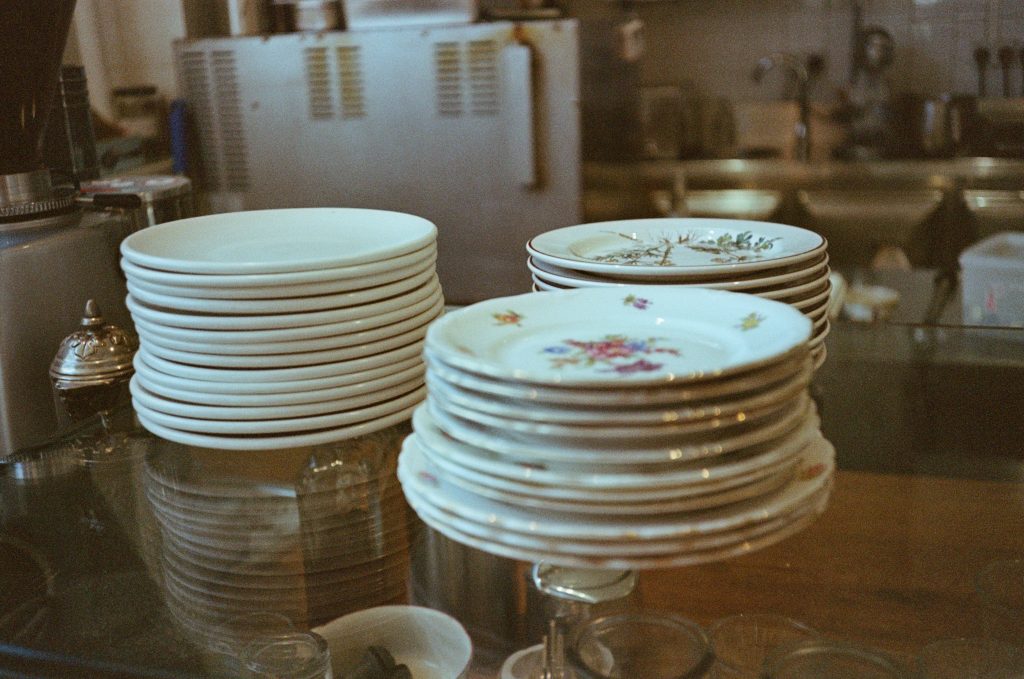
London’s food culture is obsessed with the new, yet Polentina’s appeal rests on heritage dishes many people may have never encountered. How does that shape the way you develop new dishes? Has the restaurant changed with London’s food scene since its opening?
Instead of looking for “new” dishes, we look for dishes that are new to us, and generally new to a lot of people, however old the dish might be.
We rarely try to create dishes, instead we search for old and unique recipes that we can share with our guests. There’s really nothing better than someone discovering a dish for the first time and then them having a better understanding of Italian food as a whole.
We’ve stayed very stubborn to what we like since opening. There was a very brief period of me experimenting with slightly more contemporary versions of what I do now, but that did not last long. I really do think if you try to change to suit London’s food scene you will always be chasing your tail.

Which dish do you most love watching people eat for the first time?
There’s a spaghetti dish we have on the menu right now which is with raw mazara prawns from Sicily. They’re a beautiful sweet and buttery prawn which we dice and serve raw on top of the spaghetti which has been cooked in a bisque from the prawn heads and shells. That’s a really special one, it’s visually very pleasing but equally as delicious and nearly everyone has the same reaction when they have it the first time, pure joy.
What is your essential store-cupboard item, the one ingredient (or a few key) that Polentina couldn’t run without?
We always have lemons, that’s a non negotiable. Olive oil, passata and good peperoncino.


Leave a Reply