
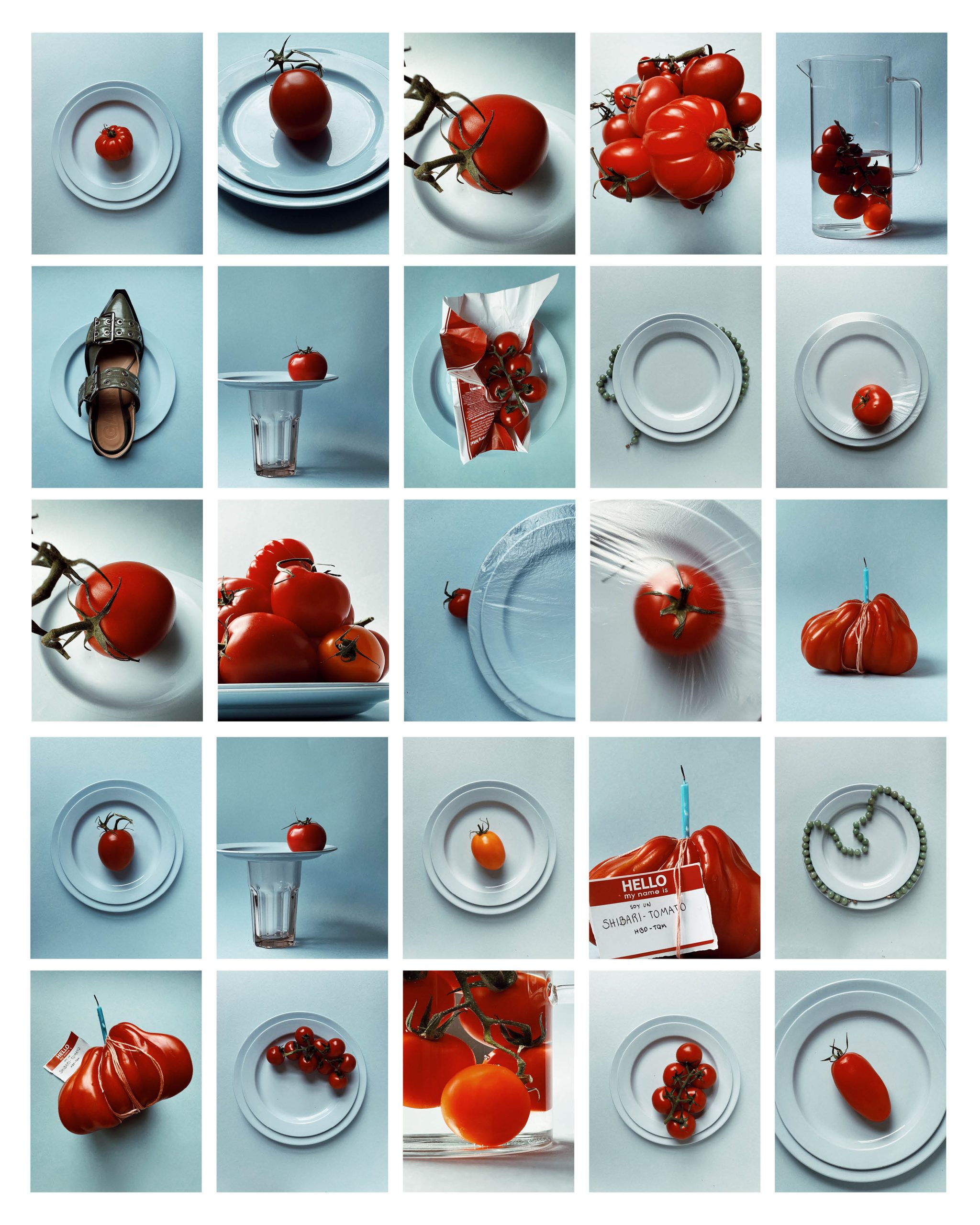
For Paola A. Sánchez Ariza, food is not something simply to be eaten, but a material to be composed, stacked, and built with: a visual language.
Born in Bogotá and working between Colombia and London, Sánchez Ariza trained first as a pastry chef at Le Cordon Bleu in Paris, before studying Design at Universidad de los Andes and completing an MA in Graphic Media Design at London College of Communication. It was in the pastry kitchen, arranging, rearranging, and photographing her cakes when she was supposed to be following the decoration guidelines, that she first sensed food might be something to compose rather than simply consume.
Today, her practice spans set design, still life, installation, and editorial work, with everyday objects, food, and consumer products at the centre of a visual language used to explore heritage, identity, and belonging. In her series Balanced Diet, food sheds its edibility altogether and becomes architecture: heavy, volumetric, almost brutalist, a ‘recipe’ assembled the way a construction would be, without a single cooking technique.
Sánchez Ariza extends this thinking as co-founder and creative director of Espacio Crudo, a visual studio specialising in editorial and commercial image production, whose clients range from Starbucks and Condé Nast to Sony Music. Alongside the studio’s work, she hosts table gatherings grounded in her research: exploratory dinners where friends translate a chosen concept, idea, or emotion into a menu, a table, an evening. Because for her, no image can quite capture the synergy that happens when there’s food around.
We speak about cakes that broke the rules, food as building material, the impossibility of separating a dish from its social universe. Most importantly, why there is no life without dessert.
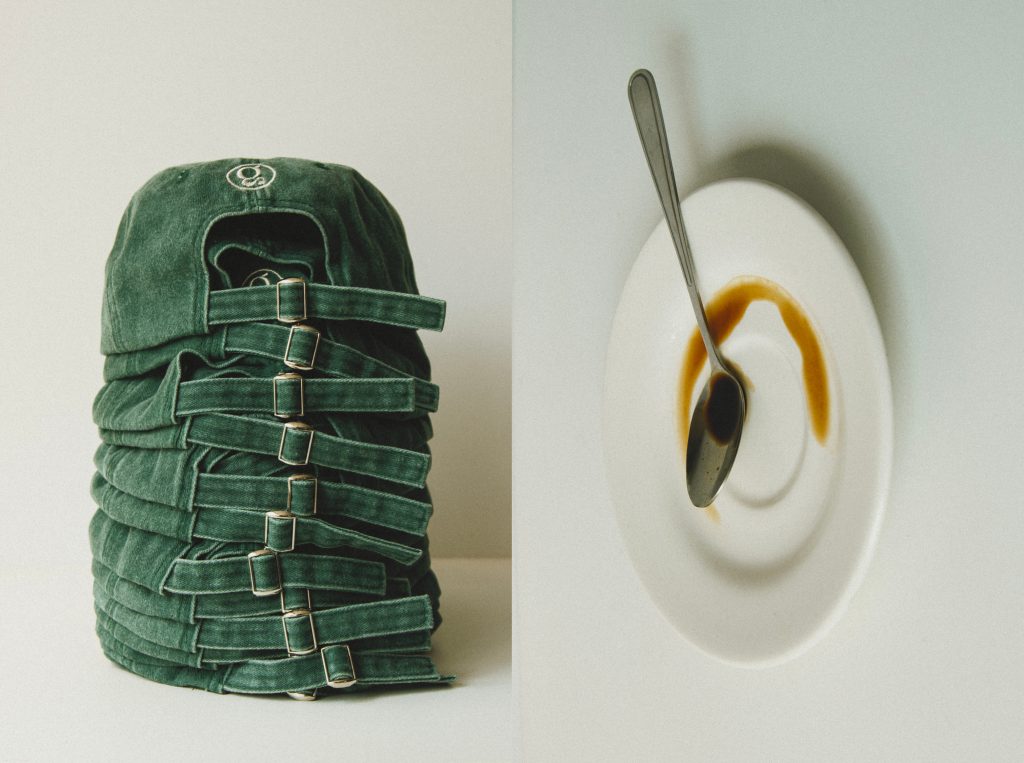
Your work treats food and everyday objects as a visual language. When did you first begin to see food not simply to consume, but as capable of constructing narrative and art?
It was a long time ago; I think my first memory of food as something more visual than nourriture itself was when I was studying to be a pastry chef. I started to become obsessed about how to make the finishing/decoration of the cakes. I was always thinking how I could organize fruits, flowers or chocolates (or basically anything that was on top) differently. Actually, I remember one of the leading chefs told me I had to follow the decoration guidelines they asked me for, otherwise I’d lose points for not knowing how to follow instructions.
One day, I found myself making compositions with those same cakes and odd objects from the house I lived in at the time (my landlord was an antique dealer) — and photographing them. I thought I wanted to be a photographer. I didn’t know yet that there was such a thing as an art director or prop stylist, or that food would eventually lead me to explore visual narratives.
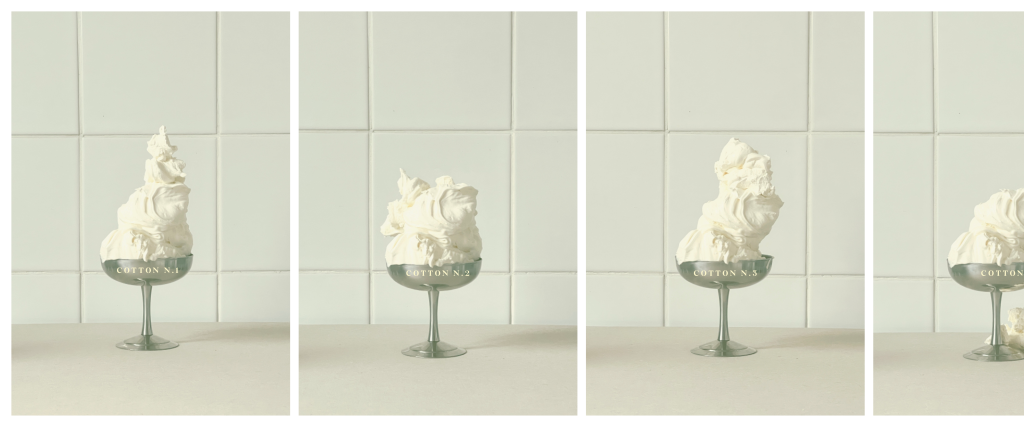
In your series Balanced Diet, food becomes architectural: heavy, structural, almost brutalist. What drew you to focus on food as matter rather than edibility?
We were looking to move away from the plate-recipe configuration of food images. We were also thinking about how to create a more volumetric composition for a dish. When we do in-house projects at Espacio Crudo, we like to explore different characteristics of food, so it felt natural to explore food as a material in itself. It was an experimental project for us — the photo series is simply the result of thinking through how to build a large, solid “recipe” without using any cooking technique, but instead assembling pieces of food the way a construction would.
You move between fine art projects and commercial art direction through Espacio Crudo. How do you navigate the line between intrigue and critique when producing food imagery?
Oh my! That’s so difficult! It took me years!
When working on commercial projects, I usually receive comments that align with a collective vision of the project. They come from preconceived ideas people have, and they respond to their own critical position and personal view of a brief — there’s no good, bad, or wrong, to be honest. So we have to learn not to take it personally, and that’s hard as hell!
When working on personal projects, there’s always space for intrigue. I don’t have a brief itself, just ideas in my head. As an experimental process, it leaves room for results that aren’t planned, or new configurations of the initial idea — or awful results that sometimes, when you put your inner critic aside, turn out great!
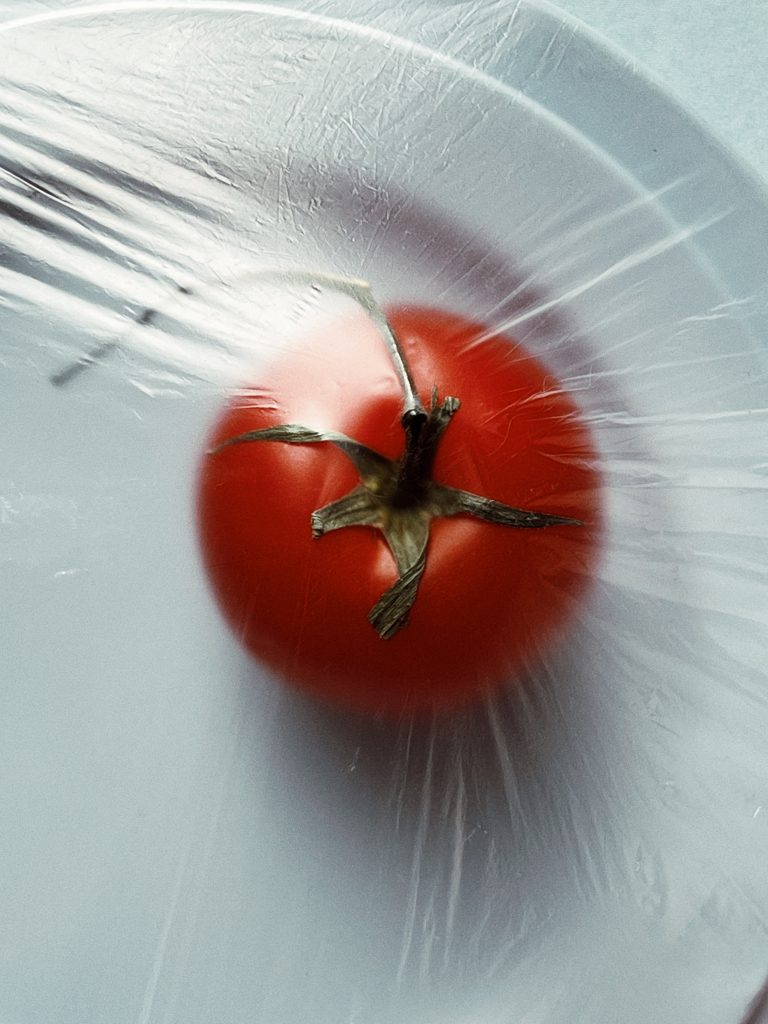
Having lived and worked between Bogotá and London, how do you experience the food scenes of each city differently: visually, socially, or culturally?
I explore food in all its magic! For me, it’s impossible to separate food by dimension — everything is intertwined. How you present a dish is closely related to the culture of a place, the availability of ingredients, or which cooking processes can be used, but also to trading routes, climate, eating traditions, migration, beliefs… everything! So, for me, food is a sample of a whole social universe that incorporates everything.
When you understand one dimension, you get to connect it to the rest, no matter if they don’t feel related on the surface. With this in mind, Bogotá and London offer completely different angles on food, even if you eat exactly the same dish.
If you were hosting someone in both cities, where would be your go-to dining and art spots?
Speaking about food, I would choose 3 types of places in each city: a food market, a street food vendor, and a super interesting restaurant.
In Bogotá, as a food market, I would choose Paloquemao, a place where you can eat a crazy number of tropical fruits. In the street food category, I would stop at the arepas cart next to Espacio Crudo and get an arepa filled with cheese and tomato-and-onion scrambled eggs (huevos pericos), topped with butter and salt.
For a restaurant, my go-to is El Chato — besides the amazing food, which is now widely known since it became Latin America’s best restaurant, Alvaro makes the absolute best desserts in town.
In London, now that I’m not there and the nostalgia is kicking in, I would go to Borough Market — no brainer — do I really need to introduce the place that hosts the best cheddar cheese, doughnut, or sausage roll in the city? A street vendor is a difficult one, since the street markets in the city are crazy! Just go to Broadway Market on a Sunday or to Victoria Park Market and you will be in heaven, but I also remember chasing the Dusty Knuckle van! And if we want to make things complicated, choosing one restaurant in the city is an impossible mission… but I would pick Gymkhana.
London’s art scene is a matter of discovering little places. Of course the Tate Modern, the Barbican, and the Hayward Gallery are a must! But the gallery vibe of the city is absolutely amazing, and you must discover it by walking — some of my must-gos would be Greycube, Ginny on Frederick (things you would have never seen), the Serpentine, and Rose Easton.
In Bogotá, I would go to Paisaje Latino, one of my favorite stores at the moment — it mixes fashion and art. You will find a very curated list of brands that are so worth checking out! And Casa Cicuta, an object heaven, is very unique. Galleries not to miss would be Casa Reigner, NC, and Espacio El Dorado.
You also host table gatherings as part of your research. What does the table, or the act of gathering, allow that an image alone cannot?
For me, it was important to switch up the working mindset around food. I enjoy food, but when all your work is related to food, finding a space to reconnect with the enjoyment was important — that’s where the gatherings take place.
We get together with friends and we cook, that’s it. But when we do it, we like to go a little extra: we choose a topic, research it, create the menu, decorate the table — we know what each of us enjoys (and what we’re good at), so the prepping is as fun as the eating. Taking pictures of it is just natural, but really, a picture can’t communicate the synergy we feel when there’s food around.
We use this space as an exploratory day, so we learn new techniques, propose new flavors, combine new ingredients — but the most important thing is understanding how any idea, concept, or emotion we choose as a topic can be translated into food. And of course, each time we have different guests who enjoy food as much as we do.
What is your dinner party essential dish or item?
Dessert. Always dessert. Do not skip the sweet part! There is no life without dessert.
–

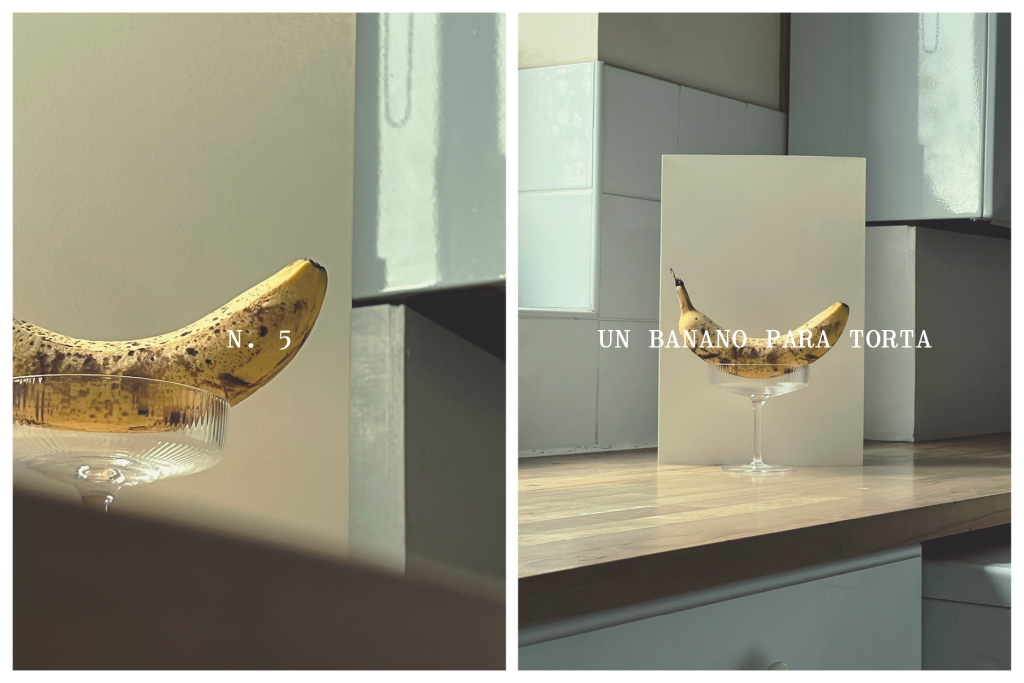
All images are directed creatively by Paola A. Sánchez
Find Paola’s portfolio: Paola A. Sánchez
Find Espacio Crudo’s art direction: Espacio Crudo

Leave a Reply