

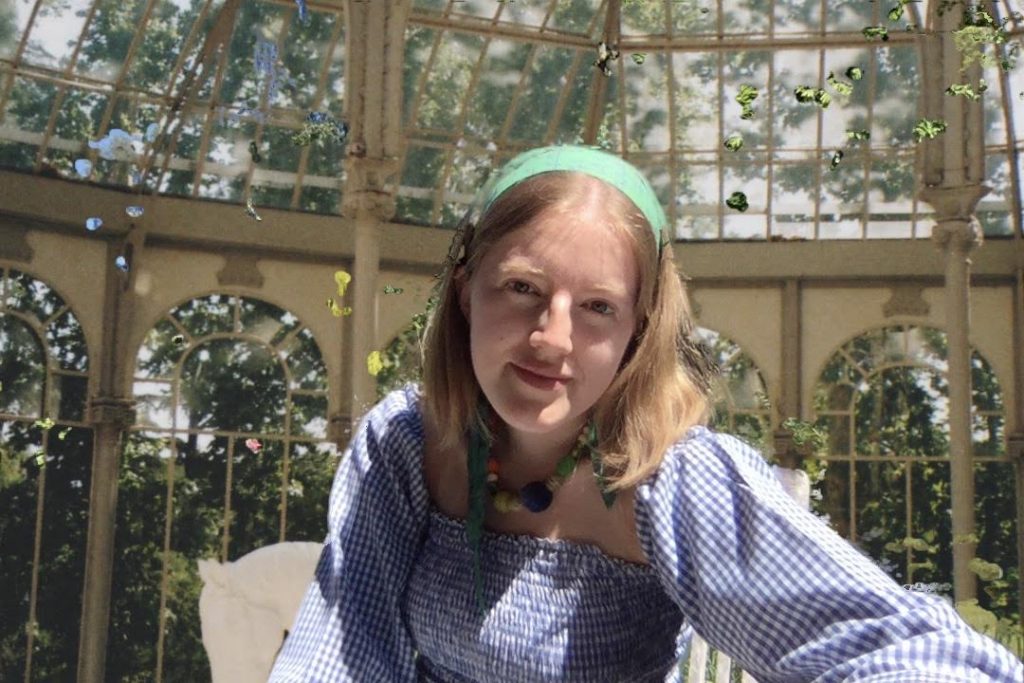
Here’s me, infront of the Eiffel Tower and a Picasso painting. C’est moi, je suis français? As we ease out of lockdown, language learning has not ceased. To spend around an hour a day learning new vocabulary, a grammar point and immerse myself into another culture, it is both a privilege, really fun and seeing as I’m going to be studying two languages at university from September, quite useful. Although I’m at different stages in my language learning for both French and Spanish, there are some things that I can do for both, engaging in different elements.
building blocks
Grammar is important, so make it fun. There are ways you can learn grammar whether that be through workbooks, Babbel, Duolingo or other online resources. Finding ways to actively engage with it will make it easier to stick. My favourite way for French was example after example exercise until it clicked (so perhaps I am not born to be a language learner, but here we are).
Vocab ! is a pain sometimes, but repetition is necessary as a building block. Quizlet is amazing, but so is writing down verbs in rainbow colours and sticking them on your wall and actively engaging with them every day. This is the same for key grammar points. I now remember the difference between soy and estoy thanks to a post-it note on my wall I’ve been looking at for the past few weeks.
Making use of online Spanish classes* like those run by the Whee Institute is a fantastic way to have the interaction in a language you may not experience as a result of workbooks or websites like Rosetta Stone. They’re still interactive, engaging and will prompt you to learn the language outside your comfort zone by using unknown vocabulary and a rapidity that you cannot achieve through pressing the tortoise button on Duolingo. Learning a language from scratch can be daunting so online classes can break that down a little.
Utilise your friends!! I cannot recommend this enough. Speaking online, like the Whee institute classes, encourages spontaneity, even if the grammar may be slightly off. Having completed my TEFL course to teach English, it is interesting to plan classes around what languages learners want to gain from learning – which isn’t always perfecting the language itself. Fluency will improve if you’re being pushed into speaking about things you like, with words you might not know yet.
culture
Art, writing, music and film or television are a fantastic immersion into the language you’re learning. Learning about the art of the language, for example Goya or Velázquez. Also, learn about the culture that is beyond our typical association of French with France and Spanish with Spain. There are so many diverse French writers, often illuminating the context of the time and their own experiences. La Belle Créole by Maryse Condé is one example of a francophone writer whose novels explore the African diaspora that resulted from colonialism and slavery in the Caribbean.
A way that I’ve been trying to challenge myself with Spanish is to follow Spanish and French blogs on Instagram (e.g. @mangoandsalt), or try to read them online for gist. I think where I want to know every word in French, I’m a bit less stringent and tend to read around the context and guess the what the word might be in Spanish. It’s something I need to employ elsewhere because I’m pushed into working out, rather than relying on Quizlet or a bilingual dictionary.
Googling articles about what you’re passionate about is a way to improve your language skills, it may not be the most practical in everyday use, but there will probably be common vocab in every article. For example, there are lots of articles about sustainable fashion in Spanish and because I’m so familiar with the context in English, working out Spanish vocabulary wasn’t the hardest.
Listening to podcasts, watching films or TV shows in the target language is another form to improve your listening ability in a way that can be adapted to what you’re interested in. My favourite podcasts for Spanish are Coffee Break Spanish and Spanishland School, the latter are short podcasts on grammar and vocab which are SO useful.
history
Addressing the history of the language you’re studying is important in understanding its roots, but also in having a deeper knowledge and awareness of the countries that speak that language. As beguiling as the history might be, most European countries profited from colonialism, treating slaves as commodities and expanding their colonies on the premise of a civilising mission. It’s necessary in breaking down pre-conceptions of a ‘white’ Europe.
One of the best books I’ve read so far this year is Afropean by Johnny Pitts, as he interrails Europe, discovering facets of African heritage within each country he visits; in Berlin, Stockholm, Paris for example. Undeniably, Africa’s presence in Europe is deep and it was so incredibly eye opening to learn about a history but also a present that I was so unaware of.
This doesn’t have to be researched in the language you’re studying and can take the chore out of repetitive vocab or sitting down for some grammar or speaking classes. It’s an immersion opposed to a practical necessity.
Learning a language is so much more than the language itself, they’re intertwined in a sense of understanding but also an acknowledgement that you don’t have to be fluent by the end of lockdown in xyz, but can gain something more. My own lockdown language journey? Well… I have been slipping in and out of Spanish opposed to going full on with trying to have a steady grasp of it before university. I know more about Spanish art than vocabulary actually in the language, which I think compounds my above point.
Have you been learning a language in lockdown? If so, let me know how it is going and what you have found most helpful!
lots of love, Eleanor xx


Leave a Reply