

It is night, and she is tired. A female figure, lost in thought and looking at a train timetable, occupies the centre of the bed. An open window renders the viewer an automatic voyeur. An articulated experience of solitude and intimacy in the city. Edward Hopper, Hotel Room, 1931.
A post about place.
Robbie recommended Leaving The Atocha Station by Ben Lerner. The narrator is in Madrid on a fellowship to research the Spanish Civil War, of which he knows nothing. Having now read it, I have tried to draw links with my own life here, gone to El Prado to stare at the painting the narrator first mentions, thought about the profundity of art, and considered even more about how pretentious the novel is but also how accurate. A questioning of the authentic man and the sometimes overwhelming demands of communication in a foreign language (and ultimately our native one too). The author references John Ashbery; of which the novel’s title is the same as Ashbery’s poem, published in The Tennis Court Oath. The poem is abstract, yet the words are evocative enough. Wikipedia informed me that Ashbery called it ‘[a]n extraordinary novel about the intersections of art and reality in contemporary life.’
Things bought at El Rastro market this week: a red suede jacket, a garish green t-shirt and a white sundress that may or may not be a nightdress.
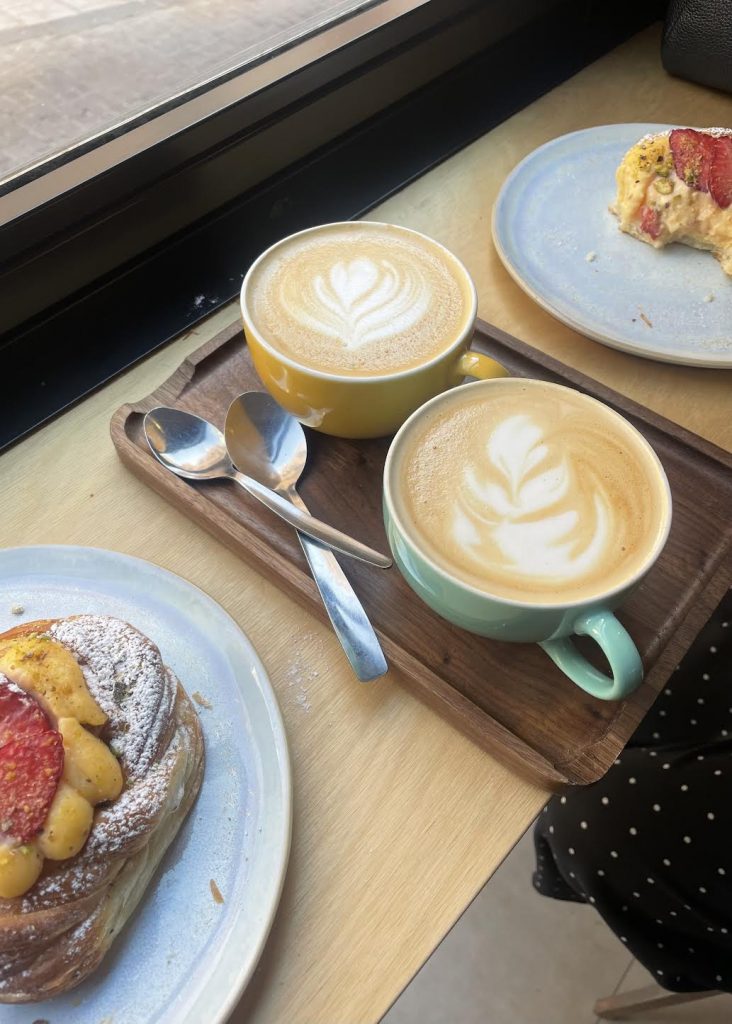

Some steps. 11,019 done between the hours of midnight and 6 am. Conversations in a kitchen. Conversations around a kitchen table. Conversations outside a nightclub. 158085. The 56 minutes, 25 seconds call I had with my best friend in the afternoon sun on a bench opposite my apartment. The 6 minutes and 25 seconds of that call where he actually got to talk about himself. My mum insists on saying mille grazie everwhere we go and it is quite endearing. Finn played his first set in Madrid. It was excellent and all other associated synonyms. Unsurprisingly my balcony is a great place for people-watching. A picnic in Retiro. The Garden of Earthly Delights. My walk to work that passes the palace (again and again). White chocolate and lime ice cream with a side of vanilla. Vanilla ice cream with a side of white chocolate and lime. The man playing Dire Straits on the Metro. The family all reading Penguin classics in the cafe at the Thyssen.
There’s a row of book stalls on the way to Retiro Park. I take one photo. Entonces. Ahora. Siempre. It’s a cookbook.
How many times can I tell people I love it here without explicitly saying I love it here.
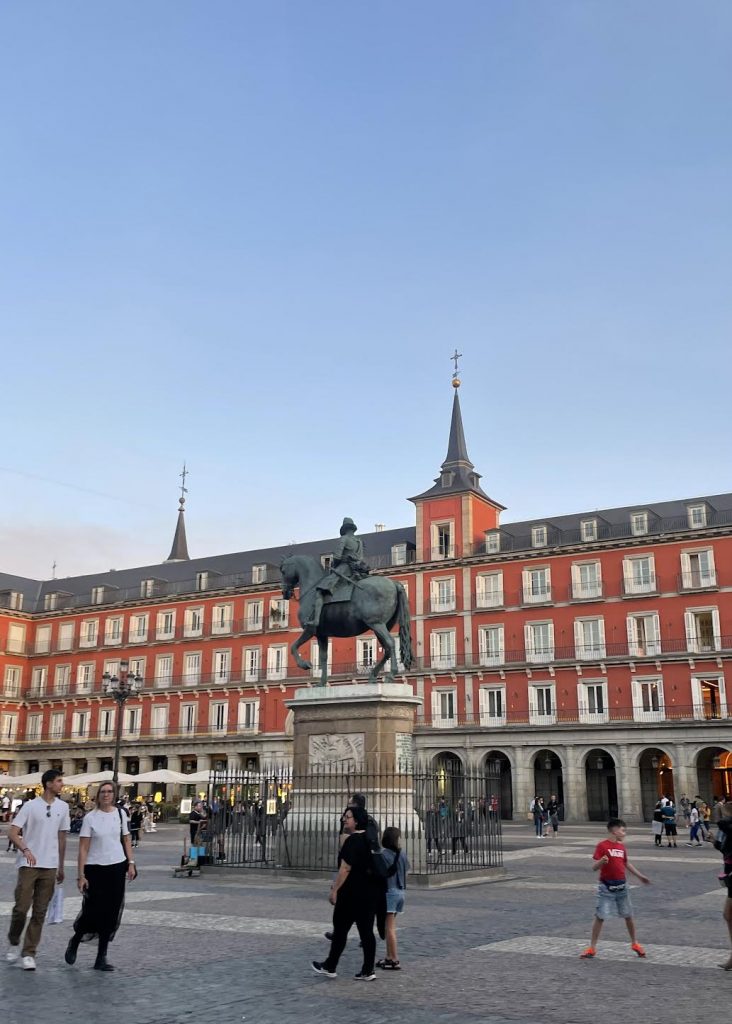

There’s just a song in all the trouble and the strife. Come see what we talk about, people moving to the moon. Don’t dream about the way things could have been. Well, you can’t get what you want but you can get me. And though admittedly all these moments are just in my head. Say, fate, my friend, you say the strangest things. Everything you said, yeah you said that yesterday. It shouldn’t ever have to end this way.
The cultural digest:
- Novo Mundo – A bakery in La Latina. All you need to know is that the queue is worth it.
- Juana la Loca – the artichokes alone are a reason why this restaurant makes the cultural digest. The dulce de leche volcano (an upmarket fondant) paired with coconut ice cream is yet another reason why I would like to own a restaurant. I would like to provide people with memories like these.
- Leaving The Atocha Station is also in the cultural digest because it is a book everyone with any connection to Madrid ought to read. Or just anyone.
- The Lonely City by Olivia Laing is a book I refer to time and time again. The Hopper painting made me think of her passages regarding his work. The book is a meditative exploration of loneliness within urban spaces.
- Museo Nacional Thyssen-Bornemisza is now easily my favourite gallery in Madrid. The breadth of impressionist works, the Freud exhibition and the overpriced coffee.


There’s a poem I read in a toilet in a bar in Marseille that I recalled in a post a few months ago. (here is the poem if you did not read):
A chair, is a chair
Except,
When you sit on that chair,
I mean,
It’s still a chair,
But it’s me
Also,
Wanting to be that chair
I understand now that this poem didn’t need to be googled to find its meaning. I did, however, google it again to see if I could find the poet but instead found the chair used to explain Plato’s theory of the forms. The idea of the chair contains its purpose. The purpose here is not just to be sat on.
I say goodbye to you on the edge of a crowded street, and you cry. I want to but cannot and a stranger tells you to stop and this is not the intimate departure you desired.
Hasta luego, Eleanor xx

Leave a Reply