
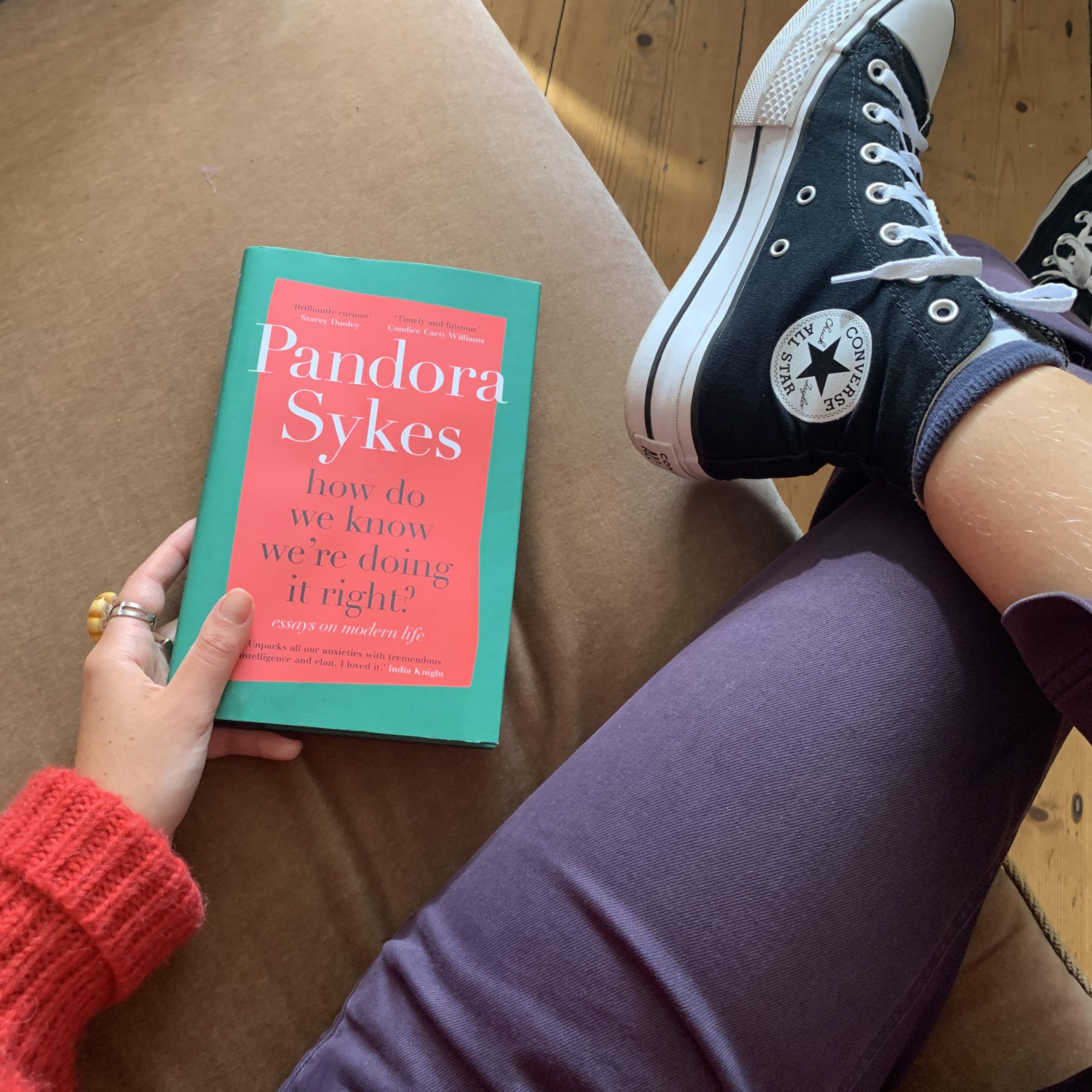
During a lovely, social-media free weekend on the Isle of Wight, I started and finished Pandora Syke’s book, How Do We Know We’re Doing it Right. A collection of essays, spanning various topics of millennial culture, all naturally interwoven with the pressing sense that social media dominates our space of being. The slight irony in the fact this was my book of choice for my digital detox does not go unnoticed, although I didn’t quite realise the sheer relevance that this collection of essays would have. The words soaked into my mind with a greater pertinence than if I then picked up my phone and started scrolling through Instagram. Ultimately, the essays brought me to the much needed present moment.
What lessons to be learnt from Pandora’s book?
Spoiler alert: I think the book will unintentionally teach everyone something different depending on their current circumstance. Despite being broad in some focuses, it is also wholly personal in one’s individual reading of the essays.
I could, and I wish I could, write a reciprocal essay to the greatness of some of Pandora’s writing. She does, in a lot of ways, compel one to act on their present state of being but in a more subtle and less overtly didactic way than a self help book. It is laced with references to the online world, often one we find ourselves existing in to a greater capacity than the physicality of the real one, more so now since lockdown. The grappling of authenticity that we face with what we engage in but also share is questioned, as well as the study of those whom authenticity and forming an authentic voice has shaped their online presence. This can lead to the flattening of women, in both the spheres of home and work that become ‘a key element to consumer capitalism’ (page 78).
Sykes’ touches on a culture that becomes homogeneous in its need to share cultural pieces of literature and film, to the expense of the individuals’ desire to choose their own. That 2019 Zara spotty dress represents a microcosm of our desire to Get The Look of our peers, much like our desire to partake in the similar cultural trends of the entertainment sector. Are we seeking to participate in trends because we want to, because we truly like what we wear or do, or do we simply feel we ought to fit in with the crowd? Not necessarily on a fashion front (the chapter on fast fashion is excellent and again, does not exert a pressure to boycott or preach, rather discuss), but also on a cultural front. Do I want to watch a film so that I can play a role in a 10 minute conversation, without ever wanting to watch it in the first place, or would I rather just watch an obscure French comedy? I felt a certain desire last year before university to watch some cultural greats, more for hypothetical discussions rather than anything else. Neither came into fruition but such a need illustrates Sykes’ point quite well.
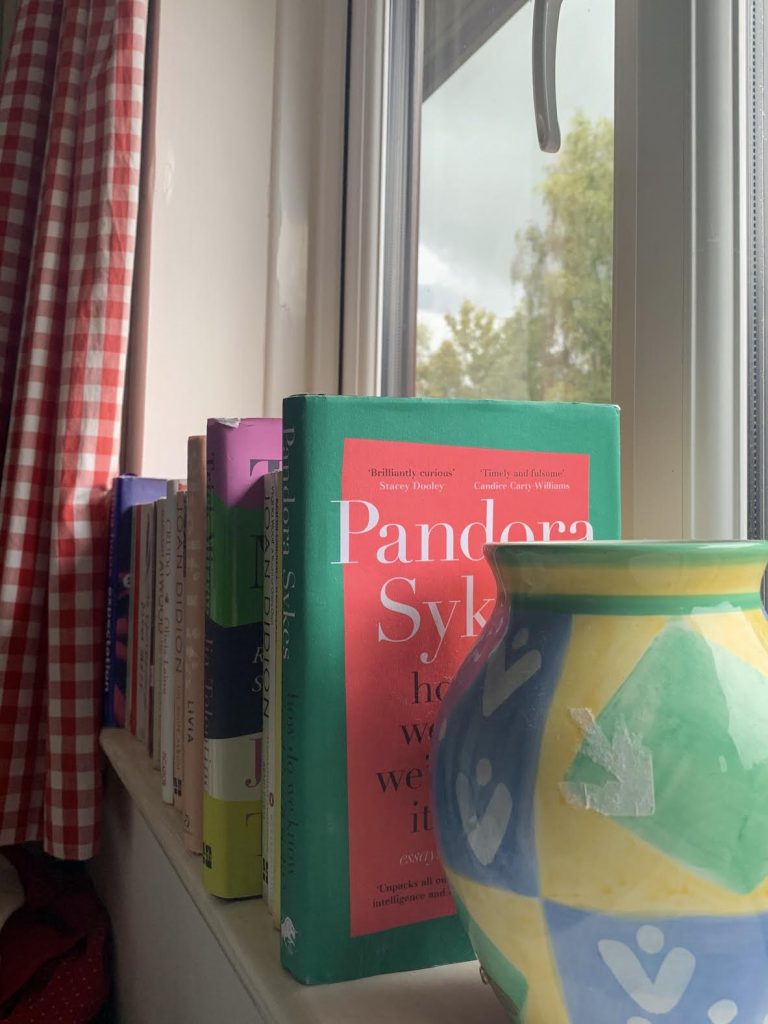
Equally, when I was reading the essays I felt a certain elation in knowing and recognising many of the writers and works that Sykes’ discusses. I do, however, then realise that many of my reading exploits have been influenced by Sykes’ herself. In the age of social media, though, we do have the power to follow who we want to follow according to our interests, so it is no doubt that my bookshelf has become a facsimile of her own, given an alignment of reading tastes. I don’t particularly feel this reflects an area of my life where I question my own interests and intentions when navigating leisure pursuits. They may be activities we engage in to relax, but the shape days and the joy that exists outside our working lives, the need for wellness that has now been capitalised to the extreme.
Granted, Sykes’ will reach a niche with her readership but I think that’s one of the points which are central to the essays. In trying to please and speak to everybody, you end up pleasing no-one, and most importantly abandon the self. A lot of the book speaks of may be considered frivolities, but that is not to be said that the essays do not grapple (in fact they are constantly grappling) with our identity and existence in the modern world; tackling motherhood, sexism and intersectionality. Everyone will take something different away from this very well researched set of essays.
Since coming back from the IOW on Monday evening, I have indeed re-downloaded the social media apps that I have vowed to go on less. I’ve put my phone in a separate room and have, understandably, taken half the time to write this post than I usually would have. Things a weekend away from social media also made me realise is that Snapchat is largely redundant but still remains a tool of contact, especially for a beloved group chat. I’ve discovered the joys of TikTok five months late to the game and I’m probably not going to re-download Facebook on my phone again. Having a ‘work’ life that exists primarily online can become consuming, but in the past few weeks I’ve felt that spending more time than necessary online brings nothing productive other than crippling comparison.
Lots of love, eleanor xx
(ps. In trying to end this post, I almost signed it off as ‘kind regards’ – work and hobbies are inevitably becoming blurred, more so due to the augmentation of WFH and it is becoming increasingly important to keep checking in and reminding ourselves what we truly value).

Leave a Reply