
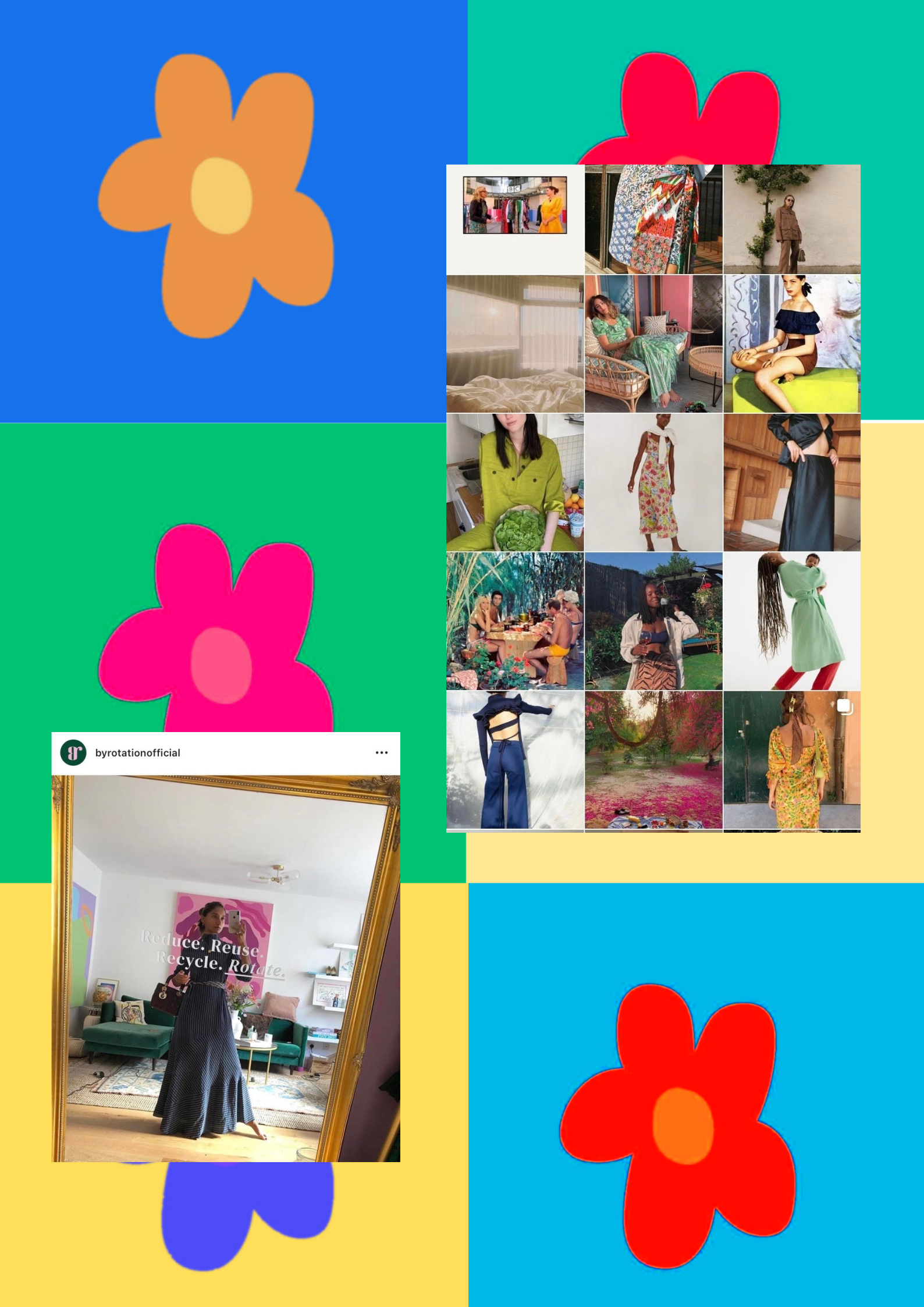
Image credit: @byrotationofficial and @onloan.co via Instagram
Click, click, buy. Due to the inordinate amount of time spent on social media during lockdown, it is unsurprising that we have been met with a bombardment of clothing, whether fast fashion or sustainable, on social media or otherwise. On the reverse of the evolving age of consumer culture, we can see an increased number of resources shared to counter consumerism and encourage alternatives to buying new. But are they engaging the young consumer?
Rental platforms, in all their glory, provide the quick fix of wearing a piece once without the guilt of it then being discarded. Someone else will love it as much as you and then pass it on. In essence, it is the high-end version of swapping an outfit with some of your closest friends. It may not be as personal, but the circular concept of fashion remains the same; developing a dialogue that you can buy something new with the knowledge that it will have a life after, and invariably one before. Think The Sisterhood of The Travelling Pants but the magic is in the sustainability of the concept. It would be hard to deny that this is not a profitable market, as data analytics company GlobalData predicts that the UK clothing rental market will be worth £2.3bn by 2029.* Not only does it tick the sustainability box, but engages with a generation of consumers that value clothing as part of their online image, as well as fostering positive benefits for our well-being in the way we feel about clothing choice. Rental platforms such as By Rotation and OnLoan are front runners in providing these sustainable alternatives to fast fashion.
To a younger generation, with the nauseatingly prescribed name of Generation Z, it is questionable as to whether renting clothing provides the same tangible joy that owning a garment provides or indeed fills a hole of a persistent buyer. The dopamine fix that may be provided with the seemingly smooth transaction of a rental-purchase, the arrival of the post and the joy of a new item of clothing. Rental platforms offer the chance for consumers to look good, feel good for that one-off Instagram picture but then provide the opportunity for someone else to revel in the garment – without the investment in problematic companies fuelling the deep environmental crisis. For commitment-phobes or fickle friends, the rental platform seems to be an ideal option for shutting the door on fast fashion buys, at least on occasion.
It could be argued that the rental mentality goes deeper, breaking down the pre-existing discourse that we need to love and cherish our clothes for as long as possible, but repurposing them for a new type of consumer and combat the persistent comparison that is often compounded by clothing choice. I asked Melissa, author of the Not What It Seams Newsletter and student at the University of Exeter, why she likes the idea of renting opposed to ownership. To this, she reinforces the notion of ‘access’ due to the way in which we can participate and ‘wear luxury garments I wouldn’t otherwise be able to afford’.
The actuality of renting clothes, aside from the sustainable wardrobe addition, also comes with a monetary bonus as a ‘savvy student’ – making money from garments gathering dust. Whilst the positives of rental platforms for young people may not be borne from a sustainability angle, they still open new conversations about the way we consider what we wear. Melissa further elaborates that Generation Z exists in a ‘paradox’, of having greater environmental awareness but also existing as the target demographic for fast fashion brands. Could renting be the happy medium for a love it and leave it teen, beyond the sustainable benefits? Emily, fashion blogger and photographer, supports the idea that ‘it is more sustainable than feeling like you have to buy a new outfit for things’, especially when it comes to occasion wear.
Naturally, there are environmental costs of renting clothing due to the constant re-packaging, dry-cleaning and shipping of garments. To say that clothing can ever be completely ethical or sustainable is absurd. It could, however, be argued that due to the very nature of not owning the garment worn, we are more likely to take care of it, thus leading to a re-evaluation of how we treat our existing pieces. If you require garment care tips, look no further than the clothing rental platform By Rotation, providing tips on how to care for your rental. Given the sustainable values held by rental platforms; ways to package, clean and ship are in motion with an environmental focus, as rental site Hurr details. What is important, though, is making considered choices where possible, taking into consideration the inclusivity and diversity of the brand and their conscious efforts to pave the way for more sustainable consumption that benefits all, including a size range that benefits the majority and not a minority when it comes to borrowing.
Yes, it could be seen as hypocritical, that as a sustainable fashion lover, I have not divulged in clothing rental platforms. However, I think this illustrates that although they indicate a new form of sustainable consumption, making considered choices with what we wear and when is still important. As I embark on university life in September, with balls and events on the horizon that may seem to require a new outfit, I may not turn to Depop or second-hand, but instead, revel in a new dress – just for a night.
Regardless of whether you would, or have, rented before, there is no denying that the rental platform is opening up a new dialogue about the way we consume; catering for a new age of the consumer.
for further rental platform recommendations, see my latest Instagram post:


Leave a Reply