

This week I tried and failed, to bid on some vintage Moygashel fabric on eBay. It was stunning and I, unluckily outbid in the last minute, was thoroughly disappointed. It was my first time attempting to bid and I can confirm it was invigorating; I will no doubt be trying my luck in sourcing more gorgeous vintage fabric soon.
By making our own clothes, we are cutting out the production process which is often the biggest polluter in the manufacturing of clothing. It also happens to be incredibly fun and it could be argued we take better care of the garments we make or mend. But what about the origins of the material it is made with? Sustainably sourcing supplies for crafts can be more challenging without access to charity shops for big swathes of fabric in the form of old curtains or duvets. Using what you have around the house and getting creative with it can actually be more interesting – forcing you to think outside the box.
sewing
There are eco-friendly fabric suppliers – my top picks are Organic Textile Company, Offset Warehouse and Merchant and Mills. These are quite often slightly more expensive, due to the fabric being organically sourced and from all-natural fibres. Buying new can be slightly complicated as well, as it is hard to get accurate information about cotton throughout the supply chain.
Deadstock fabric isn’t the solution to buying new material sustainably, but it is a more sustainable option. What is it? Fabric that is sitting around. Either due to it being leftover or fabric that textile mills have been unable to sell due to faults or an overestimation of needs. After reading an article on why deadstock fabric is not as sustainable as you think, I was thoroughly conflicted. That being said, I think there is a place for buying deadstock for unique garments – the article and others I have since read refer to this in respect to larger brands like Reformation who use it as a loophole to incorporate un-natural fabrics such as polyester into their clothing lines – a solution for immediate waste but encourages overproduction. My top picks for buying deadstock fabric are:
- Fabric Godmother – selling stunning ex-designer fabrics in a variety of materials so suitable for a range of projects
- Amo Threads – offering a wide selection of different deadstock fabrics – they’re in smaller quantities so once they’re gone, they’re gone.
- Sew Me Sunshine – another option if you’d like to get your ex-designer fix, their selection is constantly being updated.
Etsy and eBay are go-to locations for vintage fabric. I will be participating in future bids, with hopefully more success. My top tips for buying vintage fabric would be:
- make sure it is vintage and not ‘vintage style’
- check the length and width of the fabric
- the quality – is it visible from the photos?
- make sure you are aware of the composition of the material – is it cotton, silk, heavyweight/lightweight? As this will have an impact on what you’ll be able to make with it.
Shop your stash and upcycling an old item of clothing is the most sustainable option, as no new fabrics are needed for the new creation. Naturally, I have taken to using duvets with bedsheets as lining as a creative way to make something completely new. Making something new from an old piece of clothing is an easier alternative as often you can recycle parts already made. I also did not realise, until lockdown made it apparent, that many people buy charity shop clothes with the purpose of upcycling – perhaps I need to get more creative with my charity shop purchases post-pandemic. That being said, I realise that this goes against the idea of buying less and I’ve tended to operate on buying fabric I know I have a project in mind for. Fun projects to avoid lack of wastage when upcycling could be using it for a hairband or making a scrunchie. There are so many ways to change, adapt and mend what you already own. My own ‘stash’ is dwindling, which is why I have turned to other sources for materials.
If you have particularly loving neighbours or friends who want to donate clothes/fabric to sacrifice to the sewing machine then that is also a great way to make something new from something old, without the cost of buying what can be quite expensive vintage fabric.
Knitting/crochet
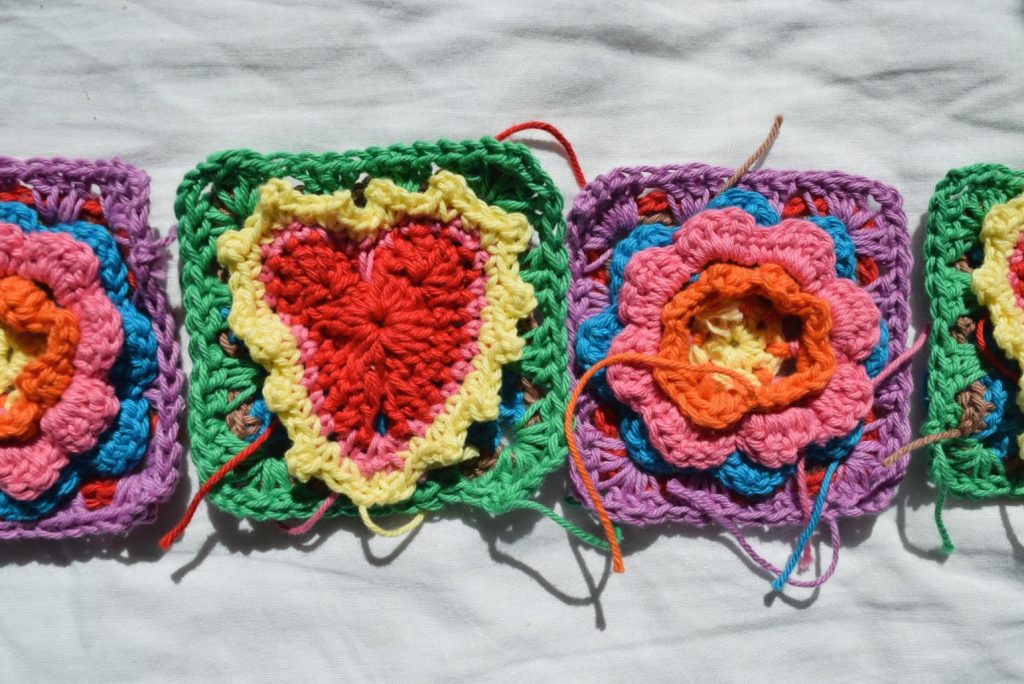
The past week has been spent blissfully (and in some angsty moments) crocheting a challenging, yet ultimately rewarding Frida Kahlo inspired top, with yarn gifted from LoveCrafts*. Did I think I was going to finish it? Absolutely not? Am I astounded at the outcome? Absolutely, considering this was my first time crocheting properly in three years. Thanks to Youtube videos coming to my aid, as well as a vast array of podcasts to listen to as I worked on it, the moment I finished was one of sheer euphoria. The crocheting bug has been reignited; a proper blog post will follow.
If you can’t seek sustainable or recycled yarn, opt for all-natural fibre yarn like cotton; as my Kahlo top is made from Paintbox Cotton DK. Yes, it may not have the most transparent origins and that is something that I am trying to avoid with future projects. For me, the aspect of sustainability also encompasses the use of leftover yarn, the longevity of the garment made and the knowledge of who made it. Paintbox has started selling recycled yarns, made from 100% recycled materials so my next project can be made with a more sustainable bent – there are also other organic cotton alternatives on the website. Lovecrafts is a haven for crochet and knitting projects and with so many patterns available for free there is grand scope for getting creative sustainably
Wool and The Gang is another great supplier of recycled yarn, their wool yarn is 100% mulesing-free and 32% of the yarns are upcycled or recycled. Encouraging inclusivity (something that buying second-hand to upcycle can often ignore), they’re pretty great catalysts for change in the knitting and crochet department. After abandoning ship on a knitting project that went drastically wrong, I’m tempted to buy a kit and attempt to try again.
Izzy Lane sells wool yarn from rescued sheep (a very lovely concept) and Garthenor sell a range of undyed and dyed yarn. Hobbii aren’t a wholly sustainable brand, however they do sell organic cotton yarn. One thing to look out for when buying yarn is whether it is certified by Global Organic Textile Standards (GOTS) – a measure of the ethics behind the production of the yarn. I’m in awe of the work that We Are Knitters are doing to provide sustainable yarn, but cannot find anything on their website that highlights they are GOTS certified. Their needles and hooks are made from 100% FSC Certified beechwood so if you’re on the hunt for supplies it may be the place to look.

notions
I’m currently using the supplies that I already own, or scrounging off my mum’s. Etsy will hopefully be my savour as an eco-friendly haberdashery. A quick google of ‘eco-friendly sewing supplies’, however, opens up a new world of places to buy from. Offset Warehouse sell a particularly good range of organic cotton thread and there are a wealth of vintage notions like buttons available online – adding to the quirky nature of a garment.
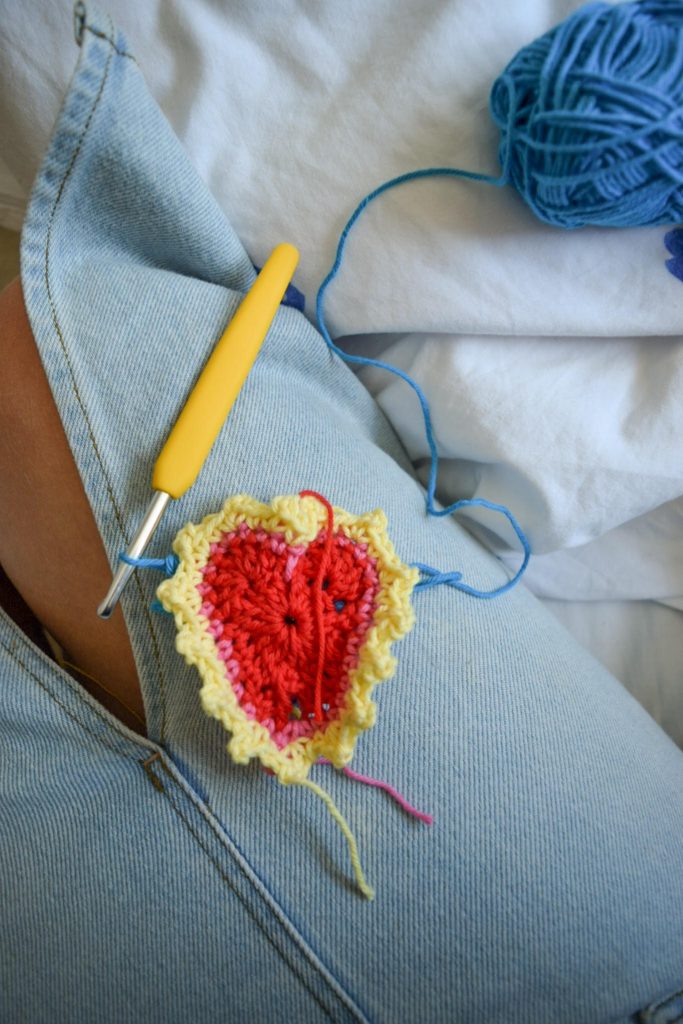
Getting back into the creative groove has been so cathartic and a very happy distraction from basically everything, to the extent that I’ve probably ignored other, probably more pressing tasks. My Instagram is slowly becoming project updates and the app itself an equal source of inspiration for future makes. Ultimately, buying second-hand is the best starting point for sustainable materials, if not – look for all-natural fibres and yarns.
Do you have any places where you like to buy material or supplies from and are there any projects you’re currently working on?
lots of love, eleanor xx


Leave a Reply